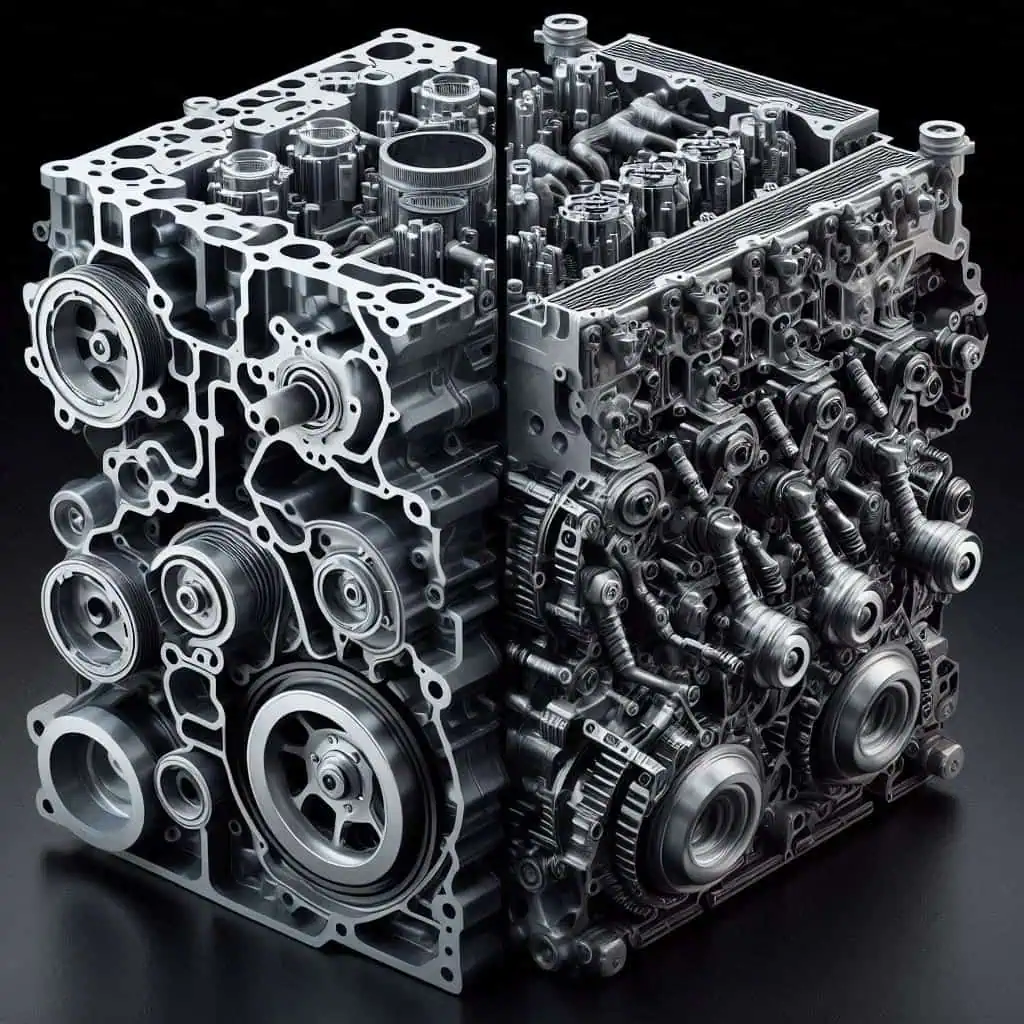
Aluminium vs. Iron Engine Blocks: Which is Better for Performance & Efficiency?
Introduction: The Great Engine Material Debate
For decades, automakers have debated the best material for engine blocks—aluminium or cast iron. While iron was the standard for over a century, aluminum has gained dominance in modern engines. But which is truly better?
Key Factors Compared:
✔ Weight (Aluminum is ~60% lighter)
✔ Heat Dissipation (Aluminum cools faster)
✔ Durability (Iron handles stress better)
✔ Cost (Iron is cheaper to produce)
(Fun Fact: The first aluminum engine block was used in a 1903 Mercedes race car!)
1: Aluminium Engine Blocks – Pros & Cons
✅ Advantages
- Lightweight (~40-50% lighter than iron) → Better fuel efficiency & handling
- Better Heat Dissipation → Reduces overheating risk
- Corrosion Resistant → Longer lifespan in harsh conditions
- Modern Manufacturing → Easier to cast complex shapes (e.g., BMW’s inline-6)
❌ Disadvantages
- Less Durable Under Extreme Stress → Not ideal for high-boost turbo engines
- More Expensive → Higher production costs
- Requires Steel Liners → Adds complexity (most Al blocks use iron sleeves)
Best For:
- Performance cars (Porsche 911, Ferrari V8s)
- Fuel-efficient vehicles (Toyota, Honda 4-cylinders)
- High-revving engines (BMW, Audi)
2: Cast Iron Engine Blocks – Pros & Cons
✅ Advantages
- Extreme Durability → Handles high compression & forced induction
- Cheaper to Produce → Lower manufacturing costs
- No Need for Cylinder Liners → Simpler construction
- Better Noise Dampening → Reduces engine vibration
❌ Disadvantages
- Heavy → Hurts fuel economy & acceleration
- Slower Heat Dissipation → Higher risk of overheating
- Prone to Rust → Requires protective coatings
Best For:
- Diesel engines (heavy-duty trucks)
- High-torque applications (muscle cars, towing vehicles)
- Budget-friendly cars (older GM, Ford V8s)
3: Head-to-Head Comparison
| Factor | Aluminium | Cast Iron |
|---|---|---|
| Weight | 40-50% lighter | Heavy |
| Heat Dissipation | Excellent | Poor |
| Durability | Good (needs sleeves) | Excellent |
| Cost | Expensive | Cheap |
| Performance Fit | High-RPM, efficiency | High-torque, forced induction |
Real-World Example:
- Ford Mustang GT (Aluminum 5.0L V8) → Lighter, better handling
- Chevy Silverado (Iron 6.6L Diesel) → Built for towing & longevity
4: The Future – Hybrid & Composite Blocks
New technologies are blending the best of both worlds:
- Aluminum Blocks with Reinforced Iron Liners (Toyota’s Dynamic Force engines)
- Compacted Graphite Iron (CGI) → Lighter than iron, stronger than aluminum
- 3D-Printed Hybrid Blocks → Custom cooling channels + weight savings
Who’s Leading Innovation?
- Mercedes-AMG (Aluminum with plasma-coated cylinders)
- Tesla Cybertruck (Gigacasting aluminum structures)