
⚡ The Battery Battle: Lithium vs Aluminium-Ion
As the leader of the electric vehicle (EV) industry, Tesla has started using lithium-ion batteries on every single Model S, Model 3, Model X, and Model Y. With the surging interest in EVs, one particular question is gaining considerable attention in the tech and green energy world:
Is it possible for Tesla to one day transition to using aluminium-ion batteries?
This is not pure science fiction. There is ongoing research on aluminium-ion technology, and It can possibly help solve the biggest existing problems in the battery world: cost, safety, and sustainability.
🧠 What Exactly Is an Aluminium-Ion Battery?
You can think of it as lithium-ion’s more powerful and advanced version. Instead of using lithium, which is both rare and expensive, aluminium-ion (Al-ion) batteries use—yes, you heard it right— aluminium, which is the third most abundant element on Earth.you guessed it—aluminium, which is the third most abundant element on Earth.
That means:
- ✅ Lower cost of materials
- ✅ Faster charging times
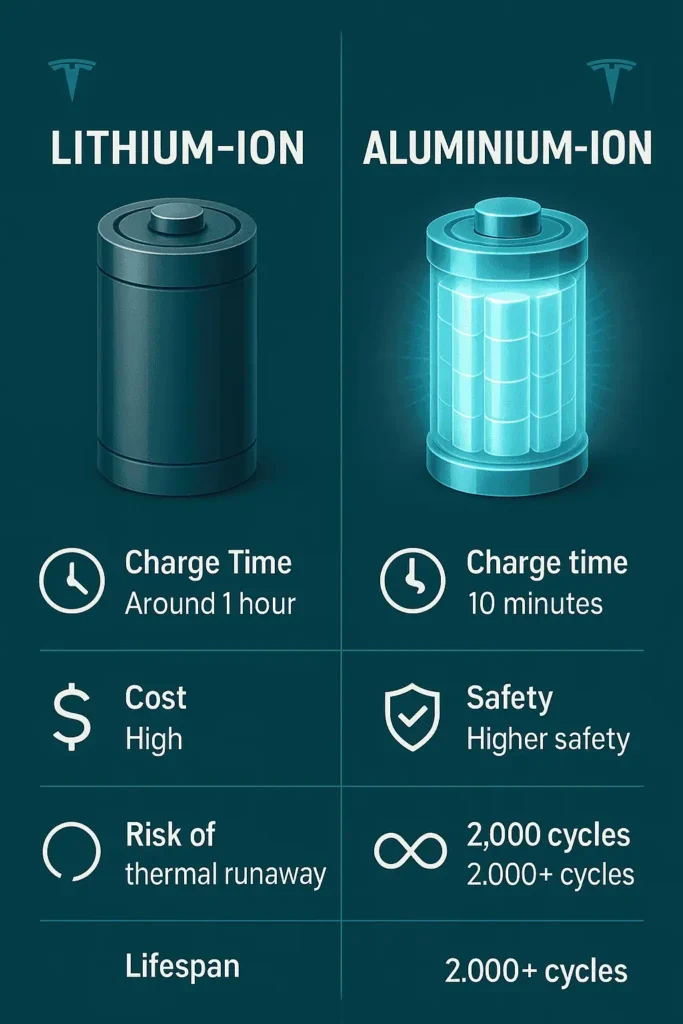
- ✅ Higher safety (no risk of thermal runaway)
- ✅ Eco-friendlier disposal
🔋 Why Would Tesla Be Interested?
While Tesla hasn’t made any official announcements about adopting aluminium-ion just yet, the signs are worth watching:
- Elon Musk has publicly voiced concerns over lithium mining’s environmental toll.
- Tesla’s Battery Day revealed their mission to reduce dependency on rare materials.
- The company is known for early adoption and bold R&D investments—just like it did with its 4680 battery cells.
If aluminium-ion batteries deliver on their promises (and early tests show they do), Tesla could dramatically cut production costs and expand EV adoption globally.

⚙️ Aluminium-Ion vs Lithium-Ion: Real-World Performance
Recent breakthroughs in aluminium-ion tech have achieved:
- Up to 60x faster charging compared to lithium-ion.
- More than 2,000 charge cycles with minimal degradation.
- Batteries that stay cool under pressure, literally.
These aren’t just numbers on paper. Startups and labs in Australia, the US, and even India are pushing Al-ion into commercialization. And Tesla’s history of acquiring or partnering with such innovators is well known.
🌍 The Global Impact If Tesla Goes Aluminium
If Tesla adopts aluminium-ion batteries in the near future, here’s what we can expect:
- Cheaper EVs for everyone
- Massive reduction in battery-related carbon emissions
- Less pressure on lithium and cobalt mining industries
- New job creation in aluminium battery production
🚀 Final Thoughts
While it’s too early to say for sure if Tesla will make the big leap to aluminium-ion batteries, the possibility is electrifying. With tech evolving fast, and the benefits stacking up, it’s only a matter of time before major automakers rethink their battery strategy.
And when that happens, aluminium could very well be the metal of the future.
📢 Want to Stay Updated?
At AluminiumIon.com, we track all the latest developments in aluminium-ion battery tech. Whether you’re a tech enthusiast, investor, or curious EV owner, this is your go-to hub for the future of clean energy.
💬 Have thoughts on Tesla and aluminium-ion tech? Drop your comments below! Let’s spark a conversation.